Showing posts with label activists. Show all posts

Wednesday, October 10, 2018

Afro Brazilian Trans Woman Gets Elected In Brazil!

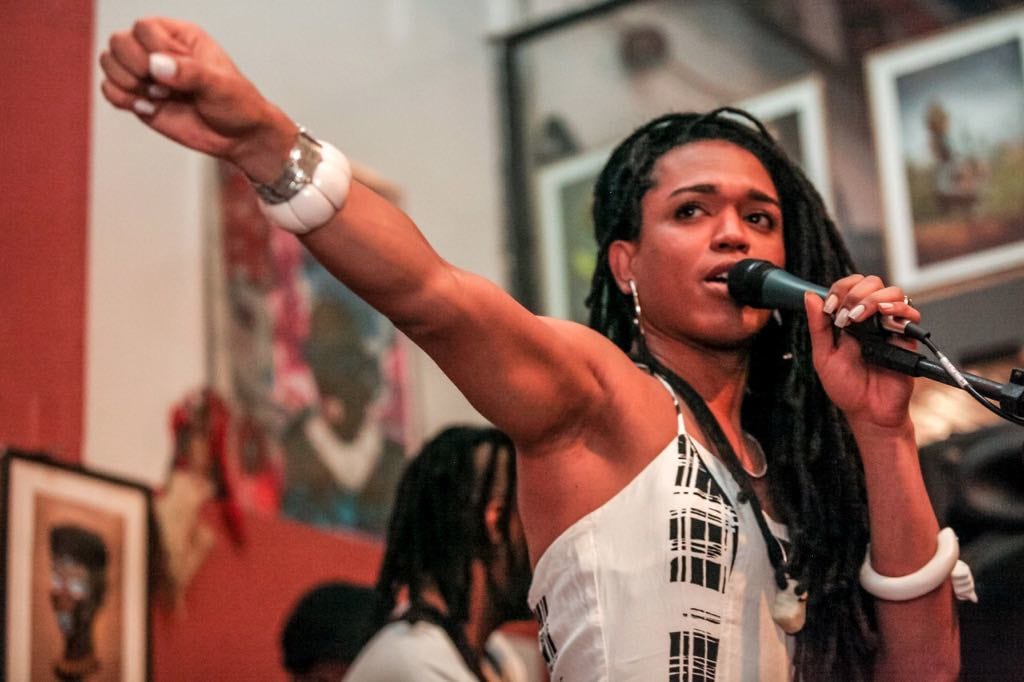
Image may contain: 1 person, closeup
There were over 50 trans candidates running in Brazil for various seats at all levels of the Brazilian government when their election took place on October 7. So far only one has broken through to make Brazilian electoral history.

She is Erica Malunguinho, an Afro-Brazilian community leader and activist who just became the first trans person to win elective office in a state congress in Sao Paulo.

She is the founder of Aparela Luzio, a space since its 2016 opening that has become important to Brazil's Black population.   Now this groundbreaking win.

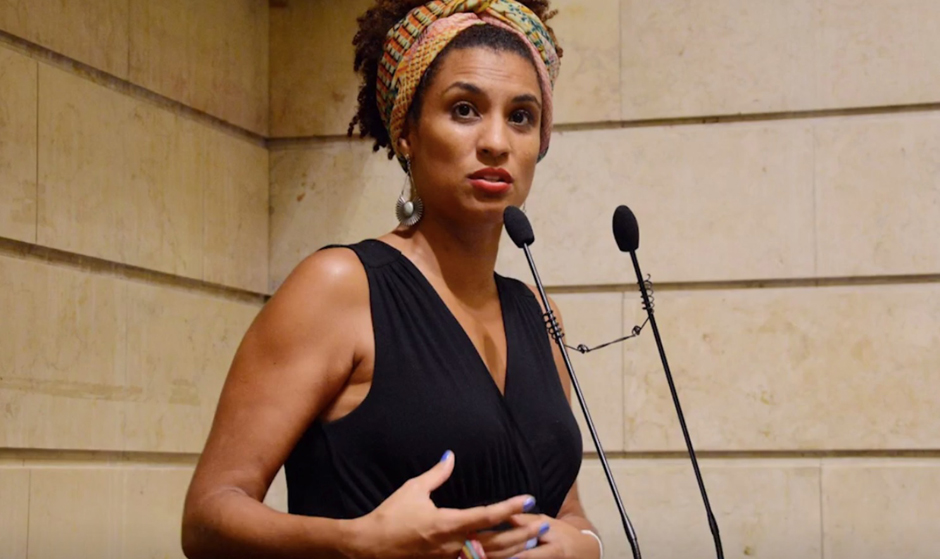
Image result for marielle franco brazil
Malunguinho was motivated to run after the March 13 assassination of queer Afro Brazilian politician Marielle Franco.    Franco was murdered a few days after she spoke out against police brutality   

Malunguinho was also part of the 'Seeds of Marielle' collective of 231 Black female candidates running for office in the country in memory of the slain advocate, and was deeply affected by Franco's murder.

Twitter
“I cried a lot when I heard about Marielle’s murder,” she told Afropunk. “Her political project was just wiped out. It was a message to us that we should not be there fighting over our bodies and resisting genocide and racism. I had so much hate in me. At the same time, I knew I needed to take this hate and do something positive with it.”

That you did.   This is a groundbreaking win for Brazilian transkind and the Afro Brazilian community.   May you represent those communities well and to the best of your ability.        


Monday, December 15, 2014

Chicago Trans Activist Joy Morris Dies

Have some sad news to report to you about one of our activist trans sisters.

Was advised by Philip Esteem and a Windy City Times article that Chicago based activist Joy Morris died December 6 after a long battle with cancer.

The homegoing service was held at the Mountain of Hope church on Saturday December 13.

Joy's activism was focused on the transgender and HIV/AIDS communities, and she was a determined warrior that demanded inclusiocommunity."n and recognition for both since the 1990's.

In order to facilitate the goal of trans inclusion in the HIV/AIDS community, Morris founded TransActions along with being the organizing force for the Legends Lunch All Star Awards that have exponentially grown under her watch.

'The community has lost an outspoken activist whose voice cannot be silenced.  Joy's 30 year lve with HIV was the inspiration for a different kind of battle. She powerfully and tirelessly fought for recognition, inclusion and equality and her resounding cry "What about the transgenders?" was singularly recognizable in the HIV community." stated Kenis Williams, Trisha Holloway, Sheila Cooper-Webb and Hannah Anderson in a statement..

Rest in power and peace, Joy.   You will be missed by your colleagues, the community and all who loved you.  

They will never forget your contributions toward making Chicago, the state of Illinois  and the world a better place.

Wednesday, May 21, 2014

Geena Goes Home

Geena Rocero is on a trip back home to the Philippines in which she is doing media appearances and interviews, speaking to local transpinay leaders and talking up Gender Proud, her international trans rights organization she founded that successfully raised over $15K in a recently concluded indiegogo campaign.

The New York based model came out as trans in a widely applauded TED talk and subsequently founded Gender Proud.

The nascent international trans organization has the mission of advocating for the ability of trans, intersex and gender variant people around the world to have legislation in their various nations allowing them to easily change documentation to reflect the persons they are now without surgical intervention .

And yeah, I get the pleasure of chatting with Geena from time to time. I'm looking forward to spending some quality time with this busy lady the next time I'm in the New York area or wherever our paths cross.. 

Before hitting the Philippines, Rocero spent some time in Hong Kong talking to local activists there who are also working hard to clean up the documentation laws there and build on the trans marriage win of Ms W.. 


She's handling her activist business.   And as you can see by the video, she's doing the trans education in her birth nation and looking fabulous while doing so. 

And thanks for giving Naomi Fontanos that hug for me.

Monday, February 10, 2014

Longtime Philly Activist Jaci Adams Battling Cancer

When I picked up my IFGE Trinity award back in 2006 in Philadelphia, after the ceremony I was taken by Dionne Stallworth and Jordana LeSesne who was living there at the time to get my celebratory cheesesteak and meet some of the local activists.

One of the people I met that day was Jaci Adams, who in the Philly area is one of their amazing and beloved activists.

She is a founding member of the Temple University Community Advisory Board, served on the planning committee for the Philadelphia Trans Health Conference, and the Morris County Planning Committee, a long term volunteer with the AIDS Law Project of Pennsylvania, a member of the Philly Police Department LGBT Liaison Committee Team and was a founder of the 2004 People With Hope Trans Conference.

Adams was also honored at OutFest last year with the first annual Jaci Adams OutProud Transgender Award

She also made the POZ 100 List, an annual compilation of the 100 HIV-positive unsung heroes and sheroes from around the country who are committed to ending the epidemic. 

jaci adams philadelphiaJaci is battling Stage IV cancer as I write this, and she is fighting it with every fiber of her being.

Ever the activist, she recently sold AIDS :Law Project raffle tickets to her chemotherapy team. 

I'm hearing the news from my Philadelphia sources that Jaci is in a hospice right now and even though she been doing everything possible to beat it, she will need the added assistance of your warm thoughts and prayers.  

If you live in the Philly metro area, may be a good idea if you have time in your busy schedules to swing by Keystone Hospice and see this valiant trans human rights warrior as well.


Wednesday, October 09, 2013

Malala's Triumphant Year

Malala Yousafzai One year ago today a gun toting Taliban thug boarded a school bus and shot Malala Yousafzai in the head for daring to speak up and criticize their efforts to turn Pakistan's Swat Valley back to the Middle Ages. 

Girls' education was banned, women were beaten for leaving their homes without a male relative escorting them, and her hometown of Mingora featured floggings and executions in its central square

She was airlifted to Britain as the world prayed for her survival, and spent three months in a Birmingham hospital recovering from her grave injuries.

Malala Yousafzai invokes Mahatma Gandhi in her UN speechShe not only survived, but the voice the Taliban thought they silenced forever on that October day has grown louder and has an even bigger international platform. 

Yousafzai celebrated her 16th birthday by speaking to a July 12 United Nations youth conference .   In that memorable speech in front of the nearly 1200 participants and assembled dignitaries, she declared  "Let us pick up our books and our pens. They are our most powerful weapons. One teacher, one book, one pen, can change the world."

When Birmingham opened their massive new public librarly last month, she again proclaimed that education is "the only weapon that can defeat terrorism.”

And she says that the West needs to engage the Taliban in peace talks if the social and political conflict in South Asia is ever to be resolved.  "The best way to solve problems and to fight against war is through dialogue," she said.

In the run up to this bittersweet anniversary the wise beyond her years teen has been interviewed by the BBC.  She was named Time Magazine's Most Influential Person for 2013, is already the youngest person ever nominated for the Nobel Peace Prize and is considered the frontrunner to receive it when the winner is announced October 11 in Oslo, Norway.  If that happens Friday, she would become the youngest person ever to win the Nobel Peace Prize.

Malala's message is being heard globally as she works to complete her own education while traveling the world speaking about the equal rights for girls and education for all.issues that are near and dear to her heart.

The nonprofit Malala Fund advocates for girls' education and raises money for schools and tuition in her native Pakistan.
 
A lot has changed for her since that horrific day, but she still has dreams of going back home, getting into politics and changing Pakistan for the better.  "I will be a politician in my future," she said, vowing to make education compulsory.

"I hope that a day will come when the people of Pakistan will be free, they will have their rights, there will be peace, and every girl and every boy will be going to school."

People around the world hope that you get the opportunity to make that dream for your homeland a reality.  

Monday, February 18, 2013

Almost Done With The Latte-Sipping Activist Crowd

TransGriot Note: Guest Post from Indigo Sage Morada discussing her frustrations with activists in her area focused moreso on the illusion of inclusion and talk about checking their privilege than actually doing the hard work to make both happen.


I am seriously wondering if I should even deal with the latte sipping "activist" crowd. White, young adult LGBT activists in the Michigan area are some of the most privileged and undercover bigoted people I ever met.

They sit there and preach about equality, checking privilege and compassion, acceptance and open-mindedness. But their personal lives are another matter. I've experienced intolerance, bigotry, outright hostility and just douchy treatment from privileged activists.

They are too busy going to their coffeeshops, drinking micro brews and congregating with clones of themselves to care.

Why was I often the only black person there? Why did black people who went to groups felt unwelcome? Quite simply, the lot of them are too absorbed in their hedonistic lives and pursuits to actually care. They actively exclude people who are not like them.

I finally concluded that people like me, who are truly diverse.....we are not welcome in their communities. We are too different, too alien to them. We are a constant reminder of their privilege, the suffering incurred by us reminds them that the system they are part of does this to us, it reminds them they they are involved and benefit from the system they oppresses us all.

And instead of checking their privilege, they just remove all sources of guilt and live in divine ignorance. They pat themselves on the back and tell themselves they are not a part of the problem. They hang in crowds of the same latte sipping clowns and tell themselves they are pro diversity.

They are not. They are just as privileged as anyone else upper middle class, white and socially acceptable.

They just get a free pass because they are LGBT.

And I want nothing to do with them. They are a obstacle to equality. I am no one's token. Not anymore.

Tuesday, July 03, 2012

NY Latina Trans Activist Starts LBCF Community Fund

As I've stated more than a few times on this blog over the last now six years and Amnesty International has cosigned on that point, Officer Friendly ain't exactly friendly at times to the trans community, and especially trans people of color

There have been more than a few times these negative interactions have turned into highly publicized court cases.

My trans sisters in New York are dealing with the disproportionate fallout of the odious NYPD 'stop and frisk' policies   Because the po-po's assume they are sex workers, if during one of those stops the transperson in question has more than three condoms on them, according to local activist that transperson can find themselves arrested for prostitution

Interesting story about long time New York trans activist Lorena Borjas, who started the Lorena Borjas Community Fund.  

The LBCF provides legal assistance and funding to pay bail for low income and immigrant members of the Queens community in which she has resided for over 25 years.

Tuesday, September 20, 2011

OUT On The Hill-The LGBT Congressional Staff Association Briefing

Dense Leclair and I took off from our undisclosed location in NW Washington DC and hit the subway enroute to the first event of the 2011 OUT on the Hill schedule at the Congressional Visitors Center.

I was also interested in finding out who was here for OUT on the Hill.  . 

The event Denise and I were attending was a scheduled 5-7 PM panel discussion sponsored by the LGBT Congressional Staff Association with the theme of 'Brother Outsider: Linking the Racial Justice and LGBT Equality Movement.'  

Denise and I got there in plenty of time although I had to go through security a few times because my low heel  boots were setting off the metal detector.   I wasn't alone because a few people had to do the same thing for various reasons. 

Note to self: don't wear those tomorrow.

I was also interested in finding out who was here for OUT on the Hill and immediately ran into Diego Sanchez and Kylar Broadus in addition to having a few of my FB friends and TransGriot readers introduce themselves to me before the panel got started.    

The panel's moderator was Robert Traynham of Comcast and the panelists for this discussion not only included Kylar, but ESPN's LZ Granderson, NAACP Washington DC bureau director Hilary Shelton, NBJC ED/CEO Sharon Lettman-Hicks, Carolyn Brown of Black Enterprise magazine, Courtney Snowden of the Raben Group and George Walker of the Victory Fund.  .

In addition to some scripted questions, they took some thoughtful questions from the audience. And yes, I wrote a question that got read to the panel and answered by Hilary Shelton and others.

The question I asked?  In light of the fact that the recent NAACP LGBT town hall had no bi or trans representation, when will African Americans  inside and outside the LGBT community have that family discussion about the transgender community and our issues?

After Shelton asked for a clarification, I along with Diego pointed out that the LA convention panel had no bi and trans representation and was heavy on the GL portion of it.  That question triggered a 15 minute discussion on trans issues which up until that point was heavily GL centric.

Since it didn't get started until 5:30, the panel concluded at 7:30 PM.   Shook hands with Hilary Shelton and had a brief discussion with him, hugged Sharon Lettman-Hicks and told her how glad I was to be here for OUT on the Hill,. had a thoughtful conversation with LZ Granderson and thanked him for the piece he wrote for CNN panning the 'Gay Is the The New Black' slogan, and talked to two students from Howard about a panel discussion on trans issues they are doing on campus soon.   

Also got to meet Stacey Long from the Task Force and Kim McLeod from GLAAD and other OUT on the Hill attendees.before I rejoined Kylar, Denise and Diego to discuss trans community and other 'bidness'.

I was also thanked by several people who attended the discussion for asking that question

Hey, it needed to be asked.  If you say an event is supposed to be TBLG, some 'B' and 'T' discussion and inclusion needs to happen, too.

And on that note, have a long day ahead of me tomorrow.  Gotta be up early tomorrow to register and be bright eyed and bushy tailed for the Out On the Hill Opening Session.

See y'all tomorrow.

\n"; document.getElementById('resselect').value=zoomres; } -->

Sunday, September 19, 2010

Dr. Ronald W. Walters Passes Away

One of the people I eagerly read who has influenced much of the way I see things politically is political scholar and expert on African-American politics Dr. Ronald W. Walters.

I've posted and quoted Dr. Walters Principles of Black Leadership on numerous TransGriot posts over the years but really hadn't gone into depth about just how farsighted he was and how much his ideas have become part of mainstream progressive policy.

Just to satisfy your curiosity about what those principles are, let me kick 'em to you one more time:

"The task of Black leadership is to provide the vision, resources, tactics, and strategies that facilitate the achievement of the objectives of Black people.

These objectives have been variously described as freedom, integration, equality, liberation, or defined in the terms of specific public policies. It is a role that often requires disturbing the peace. And we constantly carry on a dialogue about the fitness of various leaders and the qualities they bring to the table to fulfill this mission."


Two of his ideas which were considered radical back in the day such as comprehensive health care and a proposed two-state solution to the Israeli-Palestinian problem, are now mainstream progressive political thought.

He predicted in his 1987 book 'Black Presidential Politics in America: A Strategic Approach' how and what a Black presidential would have to do to get elected. He was the intellectual guru behind the formation of and early coalescence of the Congressional Black Caucus in 1970 and was on the Rev. Jesse Jackson, Sr. 1984 presidential campaign team.

In 1958 as an NAACP youth member in his hometown of Wichita, KS he pioneered and took part in a demonstration tactic that would later become famous in Greensboro, NC two years later, the sit-in.

In 2003 he predicted a resurgent white conservative movement in his book "White Nationalism, Black Interests: Conservative Public Policy and the Black Community."

In a January essay, Dr. Walters had this to say about President Obama's record in the face of criticism from the left and the right.

"I think that the pundits and the public should face up to one fact," he wrote. "The mess that President Barack Obama inherited will not be fixed in one year, or two or possibly even during his entire term.

"The media works on a timeframe of instant results. . . . If George Bush had been as criticized and interrogated as much as Obama, perhaps the edifice of problems that now challenge the very viability of America might have been stopped."


Dr. Walters died Friday in Bethesda from cancer.

"As an academic, journalist and crusader, he was in the tradition of W.E.B. DuBois," writer and civil rights leader Roger Wilkins said Saturday. "He was a man who used his intellect and wisdom to make this a fairer and culturally richer country than the one we were born into."

Dr. Walters was one of my intellectual role models. He will be missed by those of us in the African-American community and the progressive political side.

Rest in peace Dr. Walters.

Thursday, May 28, 2009

The Freezer Project

TransGriot Note: Wonderful story from north of the border about a meals project that helps recovering post operative trans peeps

Freezer Project Eases The Transition

By Sarah Fraser
Ottawa
Wednesday May 27, 2009
Xtra.ca.com

Post SRS Trans Folk Get Boost From Program


Now entering its second year, the Freezer Project is an initiative that provides a portable freezer containing 30 homemade frozen meals —and the occasional ice cream bar or eclair — to individuals who have undergone sex reassignment surgery (SRS).

The project, started by trans activist and community agitator Elizabeth Tyler in 2008, is a free service open to both trans men and trans women. It fills a critical gap for people who may not have other options in terms of household support post-surgery.

"The freezers typically go out to folks who are living alone or who are low income."

The project began after Tyler observed an acquaintance recuperating from a bilateral mastectomy. His recovery was a painful and difficult one.

"After the surgery, he couldn't open his pain medication. He couldn't use the can opener to open a can of beans. He even had trouble taking the top off of spaghetti sauce," Tyler says.

"That's how the Freezer Project was born. I thought, 'Hey, someone should do this.' Then I thought, 'I guess that person is me.' It was easy to take action on."

Prior to surgery, Tyler meets with clients to understand their preferences and needs. They discuss whether the individual has any food allergies or restrictions, such as a vegetarian diet, and they work out the month-long menu together.

Tyler drops off the freezer after the client returns from the hospital and then picks it up in 30 days' time. In the meantime, the client simply takes a Tupperware container out of the freezer each night, lets it thaw and the food is ready to be heated and eaten the following day. No additional prep is needed.

When it comes to potential clients, Tyler says that she goes on an honour system and wants to keep it that way.

"If someone wants to be a recipient of [a] freezer and feels that they need it, I do my best to arrange it for them. I would not turn anyone down, and so far, the service has not been abused."

Although Tyler is the one who initiated this project, the wider Ottawa community is now getting involved in the process of cooking and assembling the meals for each freezer.

"The Freezer Project engages the community — it gives folks a chance to help out in a simple and easy way," Tyler says.

How does it work? Tyler typically rounds up seven other volunteer cooks and asks each person to make a large pot of a specific dish, like chili or stew. They each divide their dish into four portions, which equals a month's worth of food. A little bit of effort ends up making a huge difference in someone's recovery.

For the freezer that's about to be assembled, one of Ottawa's roller derby teams has volunteered to cook everything and put it together. Amazingly, the food, the freezer and the Tupperware containers come entirely from donations and the person receiving the freezer does not pay for the service.

Beyond it being free, Tyler believes that the Freezer Project offers benefits that services like Meals on Wheels does not.

"[With] Meals on Wheels...there is not as much choice," Tyler said. "And [they] deliver at lunch time, which is not always the most convenient for people. With the Freezer Project, you create your own menu and have more variety. And we try to keep the contents nutritious."

Given that SRS is now included under the Ontario Health Insurance Plan (OHIP) — a move made by Ontario's Ministry of Health and Long-Term Care in June 2008 — more people will be able to undergo SRS. And the Freezer Project will undoubtedly grow as a result. In fact, in the last year, the project has served five clients in the Ottawa-Carleton region and more are requesting the service. Tyler is working on expanding the Freezer Project beyond Ottawa.

"The hope is to see the project take off in other cities — I'm trying to spread the word far and wide. I think the program could be applied to many different situations: I concentrate specifically on trans men and women because...there is a need for it, and it is close to my heart," said Tyler.

"I'm not aware of any other such projects in the world. It is very simple to run, and it doesn't cost a thing."

So far, the feedback Tyler has received from clients has been tremendously positive. She has received thank you cards in the mail and heartening comments from recipients.

"People appreciate that it is free and think it's a wonderful project."

If you or someone you know is interested in receiving a freezer or volunteering for the project, please contact Elizabeth Tyler at thefreezerproject@ live.com.


©2009 Pink Triangle Press

Wednesday, May 20, 2009

Coccinelle

Since I mentioned Coccinelle in a previous post, I thought it was only fair that you get to know who Jacqueline-Charlotte Dufresnoy was.

She was born in Paris on August 23, 1931. Her petite 5'3" frame and slight build led to many people questioning her gender identity. She was also aware of her gender issues at age 4 and began taking hormones in 1952.

A year later she made her debut as a transgender showgirl at Chez Madame Arthur where her mother worked selling flowers. She took the stage name Coccinelle (French for ladybug) as the show at Chez Madame Arthur became popular among Parisians and fascination about her metamorphosis grew.

She dyed her brunette hair blonde and later joined transgender showgirls April Ashley of Great Britain and Amanda Lear as a regular at the famed Le Carrousel de Paris nightclub as her popularity continued to increase.

Coccinelle usually arrived on stage wearing scarlet lipstick and wearing one of a number of outrageous mink coats dyed in different colors.

She'd already had rhinoplasty to further feminize her features, and in 1958 she traveled to Morocco and became the first European transwoman to undergo vaginoplasty by pioneering Casablanca based SRS surgeon Dr. Georges Burou.

When she returned to France, she became a media sensation like Christine Jorgenson several years before. She then remixed her look and her stage act to match the prominent sex symbols of that time period, Marilyn Monroe and Brigitte Bardot.

In addition to her new sexy image, she became appearing in various movies such as 1959's Europa di notte by director Alessandro Blasetti. More films followed, and she became the first French transwoman to become a major star in 1963 when she starred in a revue entitled 'Cherchez la femme' at the famed Paris Olympic Theater.

Coccinelle was a trailblazer and an iconic figure to transpeople who grew up in the 50's and 60's. After her operation France modified its laws to allow details on birth certificates to be amended following SRS, and she duly changed her name to Jacqueline-Charlotte from Jacques-Charles.

She also worked extensively as an activist on behalf of French transgender people, founding the organization Devenir Femme (To Become Woman). Devenir Femme was designed to provide emotional and practical support for persons seeking sex reassignment surgery. She also helped establish the Center for Aid, Research, and Information for Transsexuality and Gender Identity as well.


She was married three times, and her first marriage to sports journalist Francis Bonnet in 1960 not only was the first transsexual union to be officially acknowledged by the nation of France, she booked Notre Dame Cathedral for the ceremony. It also established a transgender person's legal right to marry in France.

Coccinelle toured the world for 25 years, and was a big hit in South America. Bob Hope was impressed by her show and offered her a tempting financial package to perform with his troupe, but she declined it. She even performed in front of the Shah of Iran and for 10 years appeared in a German cabaret run by transwoman Romy Haag. Her autobiography, Coccinelle by Coccinelle, was published in 1987 with her last public performance being done in 1990.

She later moved to Marseilles and ran her own cabaret there from 2002-2005 before being hospitalized in July 2006 following a stroke. She died on October 9, 2006 at age 75.

At her funeral, held at the Eglise Saint-Roch de Paris, Father Philippe Desgens reminded mourners: "All the children of God have a place in the Church", and noted that "by her marriage in church after her operation, and during her whole life, Coccinelle showed her faith."

Coccinelle is another of our iconic transwomen who will never be forgotten, and blazed a path that future French transwomen would follow.

Saturday, July 12, 2008

Louis Coleman: 'A First Responder To Injustice'


TransGriot note: Rev. Louis Coleman passed away on July 4. He was as Betty Baye's column mentioned, a first responder to injustice here in Da Ville and across the state.

He's also a polarizing figure here as well. One day I overheard a white co-worker of mine when I worked at Macy's griping about him and a recent LG&E price hike in the breakroom. I pointed out that if it hadn't been for Rev. Coleman protesting it and chewing on them in the media the price hike would have been even higher.

I and more than a few people in GLBT Louisville were pissed at him for two months (some are still pissed) because he sided with the bigots during the bruising JCPS policy fight a few months ago. He will be missed.


By Betty Baye
Louisville Courier-Journal
July 10, 2008

I took for granted that the Rev. Louis Coleman would always be around Kentucky, speaking truth to power as he saw it.

But the long July 4 holiday was rudely interrupted while I was out to dinner with friends. News arrived that Louis had died.

My immediate thought was that now Louis can lay down the cross that he carried for so many and let somebody take care of him.

Louis Coleman befriended me when I was a reporter back in the mid-'80s. He kicked open doors in this city and this state through which a lot a people waltzed, including some who, once seated at tables of power, denied Coleman just as Judas denied the Jesus that Louis served so faithfully for 64 years.

We've all probably heard Louis' critics; they said that his tactics were unorthodox and that he wasn't always careful about marshalling all the facts before lacing up his marching shoes and grabbing his bullhorn and picket signs.

Fact is that Louis Coleman was just too "grassroots" for some people.

He wasn't an oratorical wonder like Frederick Douglass, Mary McCloud Bethune, Malcolm X or Martin Luther King Jr. He wasn't erudite like W.E.B. DuBois. And when he mounted the pulpit of the First Congregational Church, where he was pastor for many years, he wasn't a poetic preacher like the Rev. Jesse Jackson. Louis wasn't a natty dresser like Minister Louis Farrakhan, and he couldn't turn a phrase on paper like James Baldwin or his old friend, the late Anne Braden.

No, Louis Coleman was just Louis.

He wasn't a duplicate of anyone. He had his own style, and if you know anything about the civil rights movement, and human rights struggles in general, you know that it takes all kinds.

King, for example, self-identified as a drum major for justice. When I think of Louis Coleman, I imagine a foot soldier, bringing up the rear, as someone more comfortable in a T-shirt and jeans and in the trenches rather than in board rooms -- though Louis slipped in and out of more board rooms than some might imagine.

I'll always remember Louis as a first responder to injustice; he was an accessible leader.

Louis was hard-headed, too. He didn't readily take to the advice of those who urged him to take better care of himself or to slow down. For example, he called himself retired once, but that that didn't last long. Louis ran himself ragged holding press conferences about one issue or another, leading daily vigils outside crack houses and picketing City Hall, police headquarters and job sites, where he didn't believe that minorities were getting their fair share of the work or the contracts.

Not everybody was always happy to see Louis Coleman coming.

But those unhappy folks weren't the poor kids who lined up for the school-supplies giveaway that Louis held every year. Those unhappy with him weren't the people who applauded Louis' efforts to cut down on the violence by buying back guns off the streets.

And contrary to many of his detractors, who obviously had no personal contact, Louis was no racist. He didn't discriminate among his friends or those who sought his aid.

Though Louis did generate a lot of press over the last 30 or so years, he did some of his best work behind the scenes, and he never seemed to mind, as some close to him clearly did, when he wasn't given credit for the work that he had done. And it also didn't seem to matter to Louis that when the money that came as result of something that Louis first agitated for, it didn't flow into the coffers of the Justice Resource Center, but instead went to more mainstream groups.

It's not that Louis Coleman never got angry or didn't have an ego; we all do. But what I and many others who knew this kind, wonderful human being will cherish as his legacy is that Louis was more about getting the job done than simply being famous or being loved.

Louis Coleman was one of God's originals, and I'm going to miss his face around this place. I'll miss, too, those phone calls when I'd pick up and hear his raspy voice on the end of the line saying ever so respectfully, "Sister Betty, I've written something. Do you think you can get it in The Courier?"

Betty Winston Bayé's column appears Thursdays; her e-mail address is bbaye@courier-journal.com.